
Quick note: This is general information—not legal advice. Always verify your specific situation with the City/County and qualified counsel.
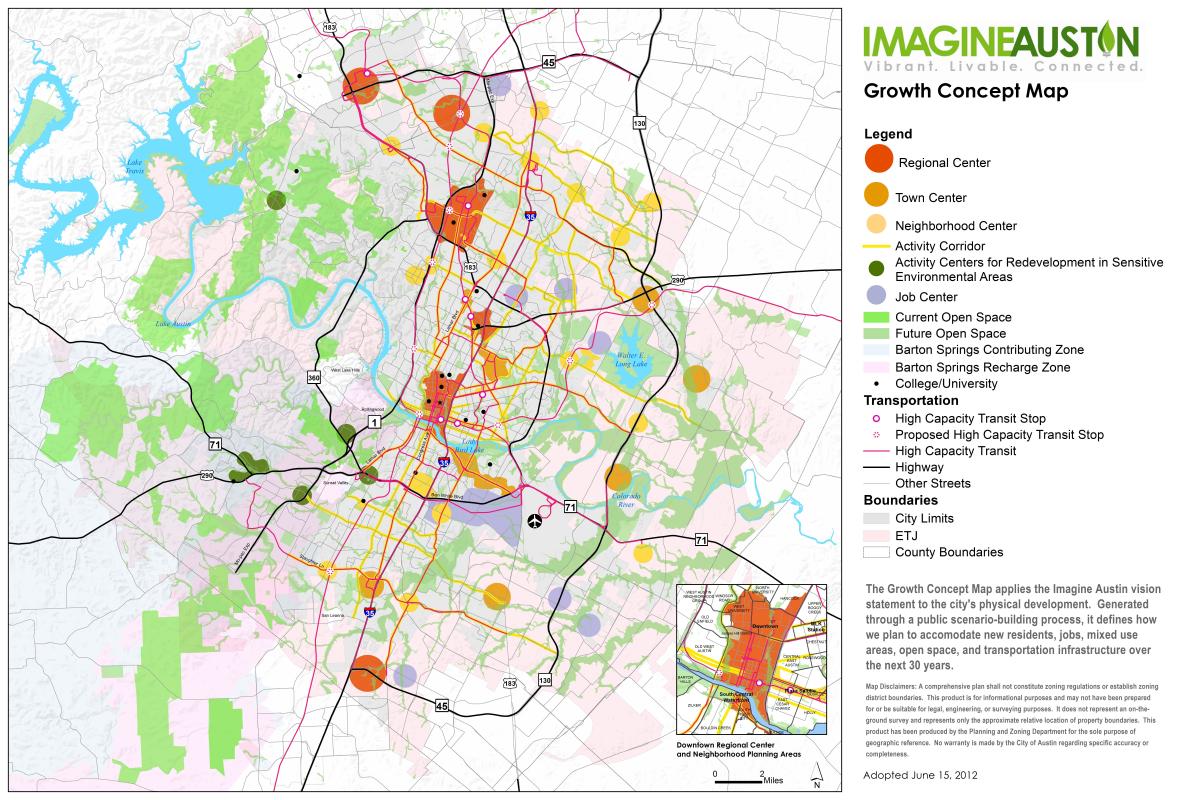
What is Austin’s ETJ?
ETJ stands for Extraterritorial Jurisdiction. In Texas, cities can exercise certain limited regulatory authority outside their city limits—primarily related to subdivision, platting, and certain development standards. The size of the ETJ is set by state law and depends on the city’s population (Austin’s ETJ can extend up to 5 miles in some areas).
Here’s the practical takeaway: being in the ETJ often means you’re “close enough to Austin” that the City has a say in certain development items—but you’re still not inside full-purpose city limits.
How do I check if my property is in Austin city limits, the 2-mile ETJ, or the 5-mile ETJ?
The easiest first step is the City of Austin’s Jurisdictions Web Map. It lets you search an address and see the jurisdiction designation (Full Purpose, Austin 2 Mile ETJ, Austin 5 Mile ETJ, Austin LTD, etc.).
Open the map here: https://maps.austintexas.gov/GIS/JurisdictionsWebMap/
ETJ Pros & Cons (the real-world version)
Potential Pros
- No city property tax simply for being in the ETJ (you still pay county/school and often ESD/MUD where applicable).
- More flexibility in some land use/building scenarios than full-purpose city limits (depending on the county and the project).
- Room for growth: some owners like being near Austin without being fully “in the City.”
- Sometimes faster paths for certain development types (again, highly situational).
Potential Cons
- Regulation without representation: you may be impacted by Austin-related development standards even though you can’t vote in City elections (common frustration).
- Subdivision/platting complexity: if you’re subdividing or developing, ETJ rules can affect timelines and requirements.
- Services mismatch: owners often assume “Austin-adjacent” means “Austin services,” but ETJ service delivery is usually a patchwork (more below).
- Annexation uncertainty: future annexation or jurisdictional changes can matter for long-term plans.
Taxes vs. Services: the #1 ETJ confusion
One of the biggest ETJ questions is: “If I’m under Austin’s ETJ, why don’t I get full city services?” In most cases, ETJ is not full-purpose city limits. Your core services are typically provided by a combination of: the county, Emergency Services Districts (ESDs), MUDs/water supply corporations, and/or private providers.
What you may pay (varies by location)
- County property taxes
- School district taxes
- ESD taxes/fees (fire/EMS coverage)
- MUD taxes/fees (if applicable) or water supply corporation rates
- HOA dues (if applicable)
What you may not receive automatically (varies by location)
- City trash/recycling pickup
- City road maintenance (often county responsibility outside city limits)
- City utility rates/availability (Austin Water/Austin Energy rules can differ by area)
- Full suite of city services tied to being inside city limits
Bottom line: ETJ can feel like “Austin rules” without “Austin services,” which is why buyers and owners ask so many questions here.
How to remove your property from Austin’s ETJ (ETJ Release)
Since Texas Senate Bill 2038 (effective 9/1/2023), there is a defined process for certain property owners/residents to petition the City of Austin for release from the ETJ (direct release path—no election required in that specific process). The City reviews petitions for legal sufficiency and, when they meet the requirements, the release can occur by operation of law.
High-level steps (direct release)
- Confirm jurisdiction using the Jurisdictions Web Map and gather basic property info.
- Assemble the petition package with required property identification and signatures.
- Submit the petition to the Austin City Clerk’s Office (in person is preferred; email submissions may be accepted).
- City review period: the City generally has a set number of days to release the area or notify you the petition is invalid.
- Record updates: once released, maps/records are updated to reflect the ETJ boundary change.
What typically must be included
- Owner/Petitioner name and contact info
- Property address
- Legal description (metes & bounds or lot/block)
- A map of the property
- Required signatures and required ID information (depending on whether it’s a voter-based or ownership/value-based petition)
Official City information + current instructions: City of Austin ETJ Release Petition FAQ
ETJ release vs. De-annexation (Disannexation): not the same thing
People often say “de-annex,” but that usually refers to disannexation—removing an area that is already inside city limits (full-purpose jurisdiction). Disannexation is a different legal framework than ETJ release.
One commonly referenced pathway in Texas law relates to failure to provide services according to applicable service plans for annexed areas. The relevant state statute is in Texas Local Government Code Chapter 43 (Disannexation). Because this is highly fact-specific (and can involve strict notice/timing requirements), it’s an area where you’ll want qualified legal guidance.
Reference statute (for background): Texas Local Government Code — Chapter 43 (Annexation & Disannexation)
Common “ETJ deal” questions I help clients think through
- Utilities: Who provides water/wastewater? Is there a MUD? What are the fees/taxes? Any capacity constraints?
- Emergency services: Which ESD covers fire/EMS? Response-time expectations?
- Roads & maintenance: County vs. private roads; who maintains; any upcoming capital improvements?
- Development plans: Subdivision/platting requirements, driveway permits, floodplain/critical environmental features.
- Future flexibility: Any risk/likelihood of annexation or regulation changes impacting your plans?
Need help with an ETJ release or figuring out what applies to your property?

If you’re weighing the ETJ (especially the taxes vs. services conversation), I can help you map out what jurisdiction you’re in, what that means for your goals (sell, hold, rent, develop), and what questions to ask before you make a move.
And if you’re ready to pursue an ETJ release: we have the right connections in place to help you navigate the process and get the petition prepared correctly.
Want me to review your address and your goal (sell / build / subdivide / hold)? Send it over and I’ll point you in the right direction.